How Can You Identify a Job Scam Before Applying Online?
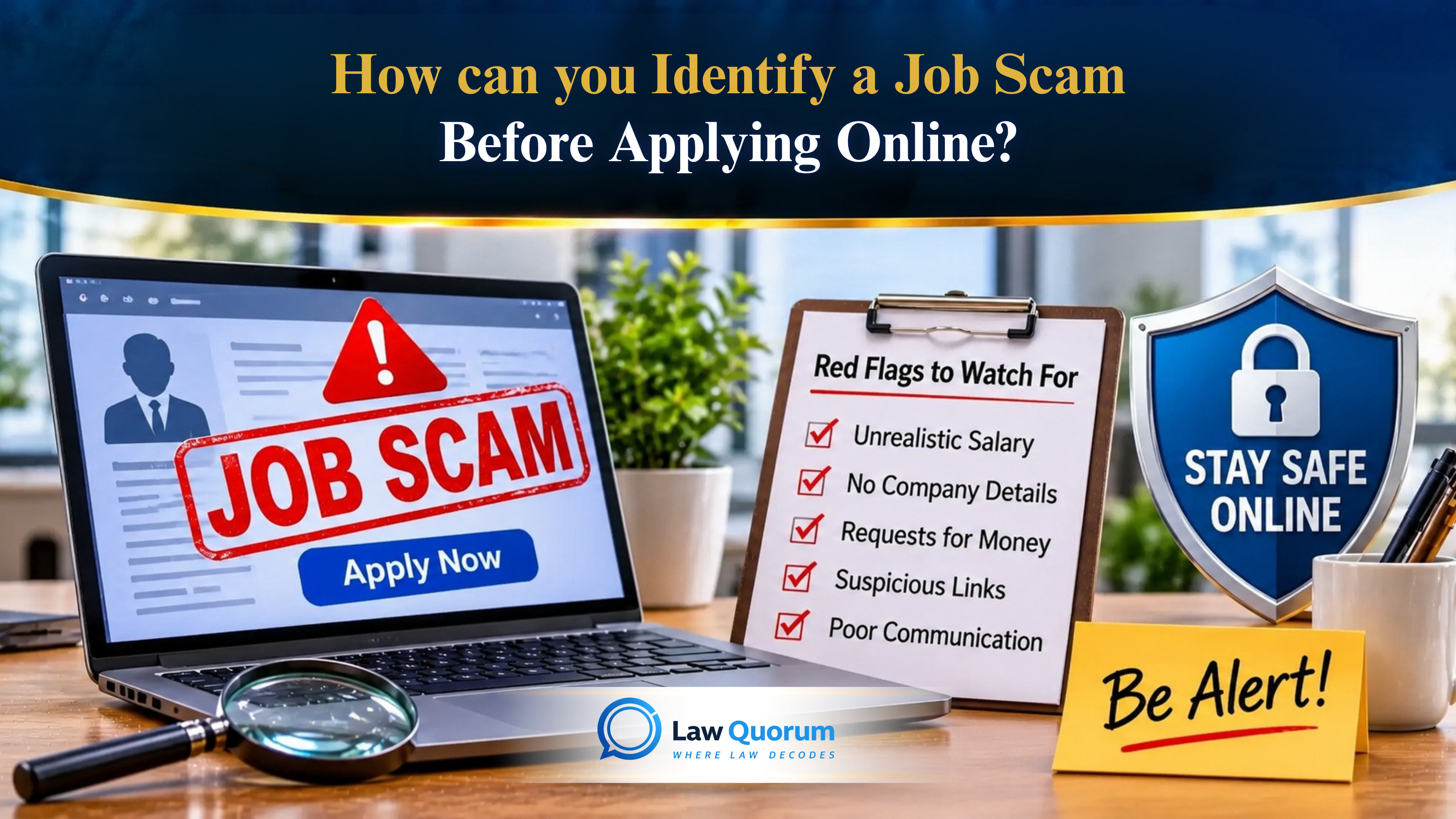
Identifying a job scam before applying online is essential to protecting your money, personal information, and career opportunities. Fake job postings, fraudulent recruiters, unrealistic salary promises, and suspicious registration fees are common warning signs that every job seeker should recognise.
Learn how to verify genuine companies, identify fake recruitment agencies, and recognise suspicious job offers shared through LinkedIn, WhatsApp, email, and job portals. This guide provides practical online job scam prevention tips to help freshers and experienced professionals avoid recruitment fraud and apply for genuine employment opportunities with confidence.
1. What Are the Common Warning Signs of an Online Job Scam?
An online job scam often involves fake job postings, unrealistic salary promises, vague job descriptions, or requests for upfront payments. Recognising these warning signs helps job seekers avoid fraudulent recruitment opportunities before sharing personal information or applying.
Common warning signs of fake job offers include:
• Unrealistic salary packages: Offers unusually high salaries for basic work experience or minimal qualifications.
• Vague job descriptions: The advertisement does not explain job responsibilities, required skills, working hours, or company details.
• Immediate selection promises: Recruiters guarantee employment without conducting proper interviews or skill assessments.
• Urgent hiring pressure: Candidates are pressured to apply immediately or make payments to secure vacancies.
• Unprofessional communication: Recruiters use suspicious email addresses, incorrect company names, or poorly written messages.
Additionally, be cautious when recruiters avoid answering questions about the organisation or refuse to provide an official website.
Practical tip: Always compare the advertised salary, job responsibilities, and eligibility criteria with similar vacancies before applying. A professional-looking advertisement does not guarantee a genuine employment opportunity.
2. How Can You Verify Whether a Company and Job Posting Are Genuine?
You can verify a company's legitimacy by checking its official website, business registration details, LinkedIn presence, and published job openings. Cross-checking these details helps identify fake companies and fraudulent job advertisements before submitting an application.
Follow these verification steps:
• Check the official website: Review the company's services, contact details, office address, and careers page.
• Verify the LinkedIn profile: Check company activity, employee profiles, recruiter details, and recent business updates.
• Check company registration: For Indian companies, use the Ministry of Corporate Affairs (MCA) portal to verify available registration information.
• Review job portal listings: Compare the vacancy details with the employer's official recruitment announcement.
• Verify the email domain: Check whether the recruiter's email address matches the company's official domain.
You can also contact the organisation directly using the contact information published on its official website.
Important: Genuine company details do not automatically prove that a particular job offer is authentic. Verify both the employer and the recruiter independently before proceeding.
3. Why Should You Be Careful About Job Offers That Ask for Money?
Candidates should be cautious about job offers that demand registration fees, security deposits, or processing charges to guarantee employment. Fraudulent recruiters often use these payments to exploit job seekers who want immediate employment.
Common payment-related job scam warning signs include:
• Registration fees: Requests for money before allowing candidates to attend interviews.
• Security deposits: Demands for refundable deposits to confirm a job position.
• Training charges: Unexpected payments for compulsory recruitment training.
• Document verification fees: Requests for payment to process educational or identity documents.
• Offer letter charges: Demands for money before issuing an appointment letter.
For example, a recruiter may promise a high-paying work-from-home position and request ₹2,000 as a refundable registration fee. After receiving the payment, the recruiter may stop responding or demand additional charges.
The National Career Service (NCS) provides free registration, job application, and interview-related services through its platform.
Remember: Never transfer money simply because a recruiter promises guaranteed selection or immediate joining. Verify the employer and payment requirements independently before making any financial commitment.
4. How Can You Identify Fake Recruiters and Suspicious Interview Processes?
Fake recruiters often impersonate genuine HR professionals using copied LinkedIn profiles, company logos, unofficial email accounts, and misleading job advertisements. Checking recruiter credentials and interview procedures helps candidates identify fraudulent hiring activities.
Watch for these suspicious recruitment practices:
• Unverified recruiter profiles: The individual has limited professional history or cannot establish a connection with the company.
• Personal communication channels: Recruiters communicate exclusively through personal WhatsApp numbers without providing official contact details.
• No proper interview: Candidates receive selection confirmations without meaningful discussions about skills or experience.
• Suspicious interview links: Recruiters ask candidates to install unknown applications or download unfamiliar files.
• Guaranteed job offers: Employers promise immediate selection without evaluating qualifications.
Before attending an interview, check the recruiter's LinkedIn profile and confirm their employment through the company's official HR department.
A genuine interview generally includes questions about qualifications, technical knowledge, previous experience, salary expectations, and job responsibilities.
Practical tip: Never trust a recruiter based only on a company logo, professional photograph, or convincing offer letter. Independent verification is essential before sharing documents or accepting an employment offer.
5. What Personal Information Should You Never Share When Applying for a Job Online?
Job seekers should never share passwords, OTPs, banking credentials, UPI PINs, or confidential financial information with unverified recruiters. Protecting personal information during an online job application reduces the risk of identity theft and financial fraud.
Be careful when recruiters request the following information:
• Banking credentials: Never share debit card PINs, CVV numbers, internet banking passwords, or UPI PINs.
• OTP verification codes: Do not disclose OTPs received through SMS, email, or banking applications.
• Identity documents: Avoid sharing Aadhaar, PAN, passport, or other sensitive documents with unverified individuals.
• Personal photographs and signatures: Share these only when genuinely required through verified recruitment channels.
• Account access: Never provide access to your email, social media, or financial accounts.
Some genuine employers may request identity and educational documents during the appropriate recruitment or onboarding stage. However, candidates should verify the organisation before submitting sensitive information.
You can also use document masking and purpose-specific watermarks when submitting copies where accepted.
Important: A genuine recruiter does not need your banking password, OTP, or UPI PIN to process a job application.
6. How Can You Verify Job Offers Received Through WhatsApp, Email, and Social Media?
Verify job offers received through WhatsApp, email, LinkedIn, and other social media platforms by checking the sender's identity, official contact details, website links, and recruitment information. Never assume that a message is genuine simply because it contains a company logo or professional-looking advertisement.
Use these platform-specific verification methods:
• WhatsApp: Confirm the recruiter's identity and vacancy through the company's official HR contact.
• Email: Examine the sender's complete email address, domain spelling, suspicious attachments, and unexpected links.
• LinkedIn: Review the recruiter's employment history, professional connections, and association with the organisation.
• Facebook and Instagram: Check whether the recruitment announcement appears on the company's official social media accounts or website.
Also, avoid clicking shortened URLs or downloading unknown applications shared by recruiters.
For example, if someone sends an offer letter through WhatsApp claiming to represent a multinational company, contact that company's HR department independently before accepting it.
The National Career Service also provides guidance on identifying fraudulent recruitment communications.
Practical tip: Open the company's website manually instead of relying on links received through unknown messages. Independent verification can help prevent fake job offer scams and online recruitment fraud.
7. What Should You Do If You Suspect a Job Scam or Have Already Been Scammed?
If you suspect a job scam, stop communicating with the recruiter, avoid additional payments, and save all available evidence. If you have already transferred money or shared sensitive information, take immediate steps to protect your financial accounts and report the incident.
Follow these steps to respond to online job fraud:
• Stop further communication: Do not respond to suspicious payment requests or additional demands.
• Save evidence: Collect screenshots, WhatsApp conversations, email messages, phone numbers, payment receipts, and website links.
• Contact your bank: Report unauthorised transactions immediately and request assistance in securing your account.
• Report cybercrime: Call India's cybercrime helpline at 1930 for financial cyber fraud.
• File an online complaint: Submit the incident through the official National Cyber Crime Reporting Portal .
• Report fake profiles: Inform the relevant job portal, social media platform, or company being impersonated.
If you have shared passwords or banking credentials, change them immediately and contact your bank to secure your accounts.
In India, reporting financial cyber fraud quickly can help authorities and financial institutions take appropriate action.
Remember: Do not pay additional fees to anyone promising guaranteed recovery of money lost through a job scam. Verify all recovery services independently.
Additional FAQs About Online Job Scams
1. How can I identify a fake job offer online?
Check the company's official website, verify the recruiter, review the job description, and look for suspicious payment requests or unrealistic salary promises.
2. Do genuine companies ask for registration fees?
Candidates should be cautious of employers demanding money to guarantee selection or secure a job. Verify any recruitment-related payment independently before proceeding.
3. How do I verify whether a recruiter is genuine?
Check the recruiter's LinkedIn profile, company email domain, professional background, and association with the employer. Confirm their identity through the company's official HR department.
4. Where can I report online job scams in India?
You can report cybercrime through India's National Cyber Crime Reporting Portal or call 1930 for financial cyber fraud assistance.
5. Can scammers use genuine company names to post fake jobs?
Yes. Scammers often impersonate established companies using copied logos, websites, and employee profiles to make fraudulent vacancies appear legitimate.
6. Are work-from-home job offers more likely to be scams?
Not necessarily. However, be cautious of remote jobs promising unusually high salaries for minimal work without proper interviews or skill assessments.
7. How can freshers avoid fake recruitment agencies?
Freshers should verify agency registration details, check company reviews, confirm recruiter identities, and avoid paying upfront fees for guaranteed placements.